
What's In A Name?
The origin of The Otsego.
Justin Escher
4/24/20263 min read
What's in a Name?
"What's in a name? That which we call a rose by any other name would smell as sweet."
Shakespeare posed that timeless question in Romeo and Juliet, suggesting that a name is merely a label — that the true essence of something lies deeper than its title. Yet when it comes to guitars, names carry real weight. They evoke history, place, craftsmanship, and the stories behind the wood and wire. At Escher Guitars, names aren’t chosen lightly. They’re a way to honor tradition while carving out something new.
First, my sincere apologies for the long silence here on the blog. My last post went live back in October, and time has a way of slipping away when you’re deep in the workshop. Between sourcing materials, refining designs, and bringing new instruments to life, the days fill up quickly. Thank you for your patience — I’m excited to get back into sharing the journey with you.
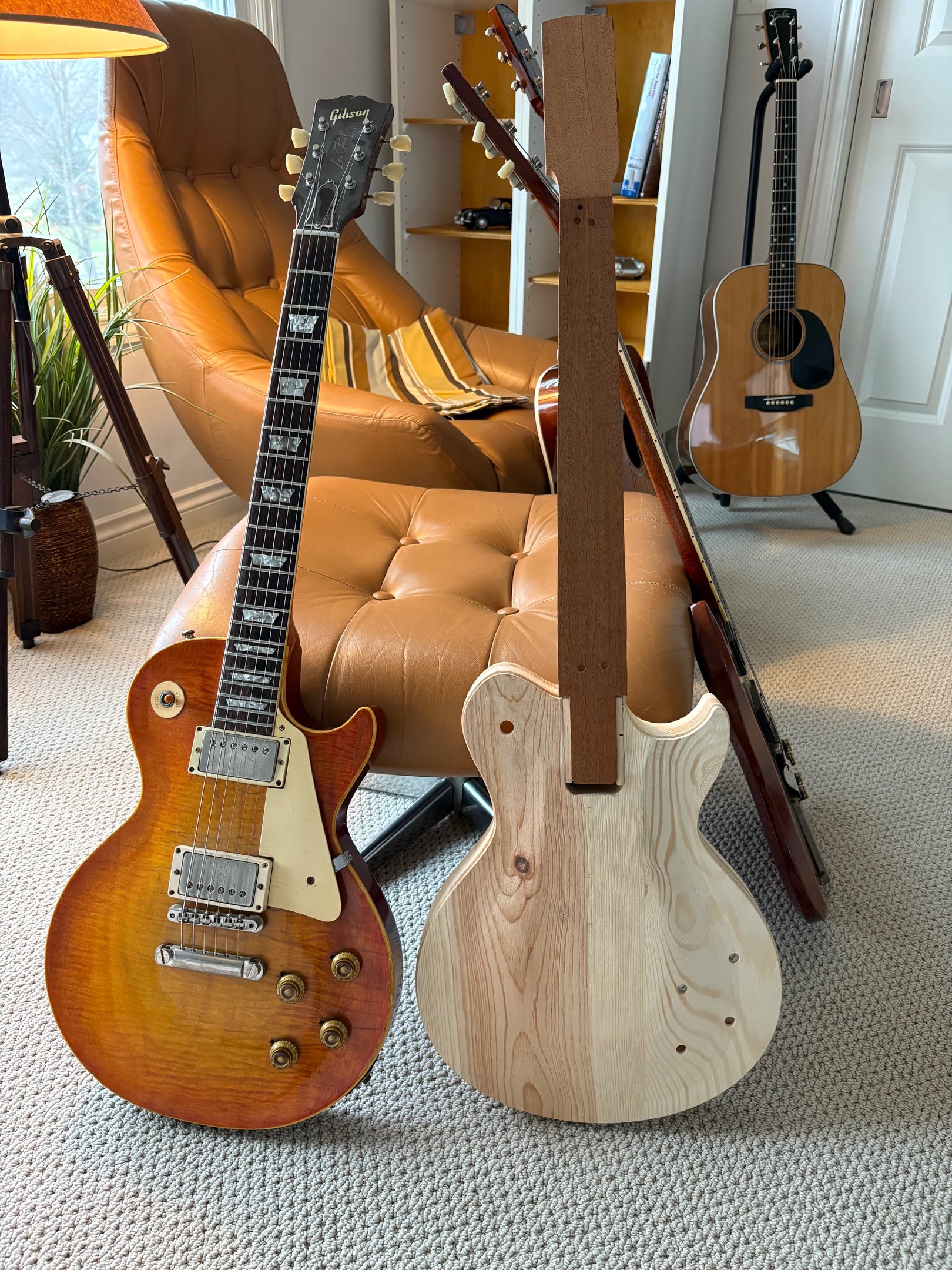
Right now, I’m knee-deep in my latest project: the new Otsego electric guitar. This will be the first in a small run of just 13 instruments, and I couldn’t be more thrilled with how it’s coming together. I’ll follow up very soon with more detailed posts and videos walking through the full build process, from raw wood to finished guitars.
So, What’s in the Name “Otsego”?
If you do a quick online search for “Otsego,” you’ll likely find that the name is derived from Iroquois (Mohawk or Oneida) terms, often interpreted as meaning something like “clear water” or “place of the rock.” It’s a beautiful name with deep Native American roots, appearing in place names across New York and Michigan.
While that’s not the primary reason I chose it for this guitar, I love how “clear water” brings to mind words like glassy, mirror-like, lucent, sheer, and pure — all qualities a great instrument should possess. And “place of the rock”? Well, that kind of speaks for itself.
That said, my real inspiration for naming this model — and future Escher guitars — comes from the small towns near Kalamazoo, Michigan. Having lived in the area for years and being a longtime collector and fan of Gibson guitars, I learned that many of the skilled craftsmen who built those legendary golden-era instruments commuted from these surrounding small towns. They brought their hands, their sharp eyes for detail, and their quiet dedication to the factory each day. I’ve had the opportunity to speak with several of these craftsmen over the years, and it was always a treat.
I wanted the Otsego to recognize and celebrate that rich guitar-building heritage in and around Kalamazoo — the place where so many iconic American guitars were born. Kalamazoo wasn’t just a factory town; it was a community of luthiers whose work still resonates today.
Inspiration and What Makes the Otsego Special
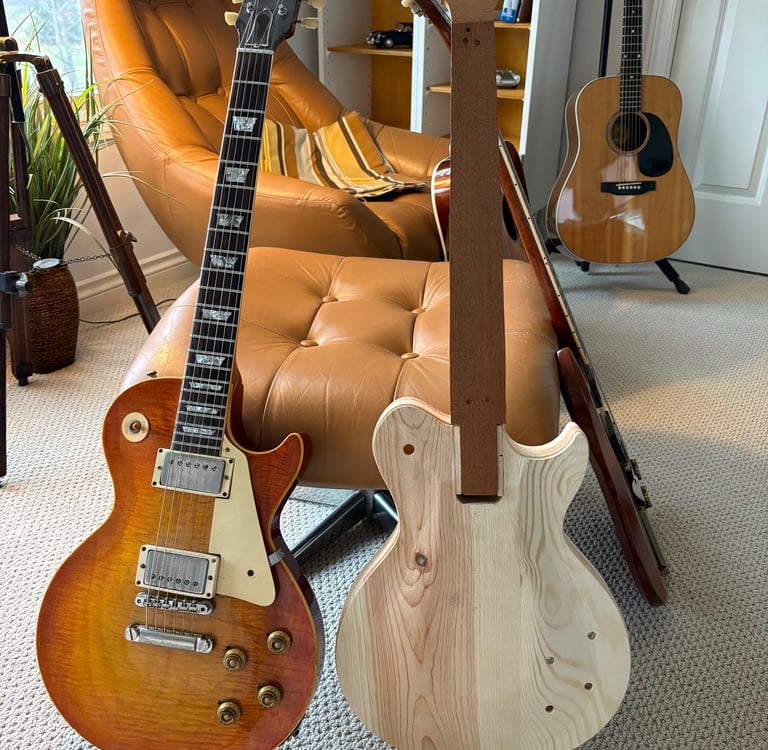
The Otsego draws strong inspiration from my personal 1956 Gibson Les Paul. Born as a goldtop, it was later refinished by a previous owner into a beautiful “burst.” I played this guitar for many years in the Huntunes, and while the Otsego is not a copy or a clone of that ’56, you can clearly see the family resemblance in the overall shape, elegant curves, neck profile, and classic vibe. At the same time, it has its own distinct voice and refinements that make it a true Escher original.
While many builders focus on exact reproductions of the old 1950s Les Pauls, I wanted something that honors that golden-era spirit while incorporating features you simply can’t get on a currently produced Les Paul.
One of the coolest aspects of the Otsego is the use of NOS (New Old Stock) Brazilian Rosewood fretboards. I was fortunate to source these from an estate sale of a former Gibson employee. These boards were likely stored for decades in the very same racks or facilities where the fretboards for those classic 1950s Les Pauls were kept. There’s something magical about knowing the wood carries that direct connection to Kalamazoo’s heritage — like bringing a little piece of guitar history into every instrument.
Another unique feature is the use of “Michigan Maple” tops, sourced from the same region where Gibson acquired their tops in the 1950s.
The result is a guitar with exceptional tone, beautiful figure in the maple and rosewood, and a feel that beautifully bridges the past and present.
I’m incredibly excited to share more as these first 13 Otsegos take shape. In the coming weeks and months, look for in-depth build updates, process videos, and plenty of photos showing everything from neck carving and body shaping to finishing and final setup.
In the meantime, if you have questions about the Otsego or any of my other builds, feel free to reach out. Whether you’re a collector, a player, or simply someone who appreciates fine handcrafted guitars, I love talking about the details that make each instrument unique. I'd also love to talk about Shakespeare whipping out a few sonnets in his tights with an Otsego slung across his shoulder (in drop D tuning of course)!
Thanks for reading, and stay tuned — more is on the way.
— Justin escherguitars.com